Science News
 American
Science News for 22 May 2024
American
Science News for 22 May 2024
Strong Link Between Teen Cannabis Use and Psychosis Risk
Neuroscience News - 22 May 2024 23:29 A new study finds a strong association between teen cannabis use and a significantly increased risk of developing psychotic disorders. This risk appears to be age-dependent, with adolescents being particularly vulnerable...
Ultra Processed Foods Associated with Cognitive Risks
Neuroscience News - 22 May 2024 23:49 A new study finds a link between a diet high in ultra-processed foods and an increased risk of cognitive impairment and stroke. This association was particularly pronounced among Black participants. While more research i...
Cows used for cuddling therapy may prefer women over men
New Scientist - 22 May 2024 15:00 Cows seem to be more willing to lick and accept food from women, and are more likely to act aggressively around men
Brain Ripples Reveal Daydreams' Origins
Neuroscience News - 22 May 2024 22:10 Researchers discovered a link between "sharp-wave ripples" in the hippocampus and self-generated thoughts like daydreaming. These ripples, originating in the memory center of the brain, were more frequent during sleep an...
H5N1 bird flu has spread to human from cow in 2nd probable case, CDC reports
Live Science - 22 May 2024 23:41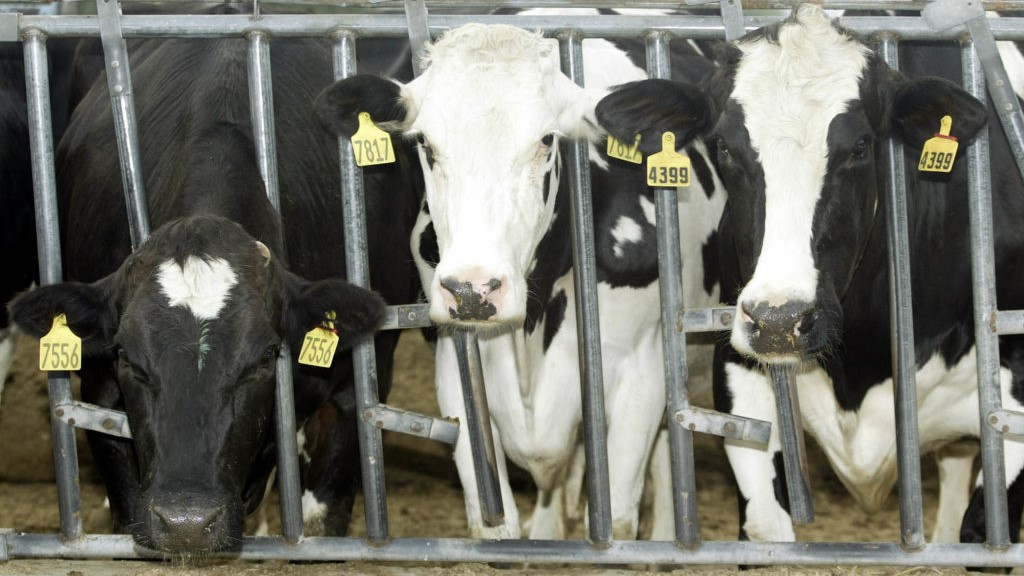 A dairy worker in Michigan contracted an eye infection on a dairy farm where H5N1 had been identified in cows.
Nuclear physicists make first precision measurements of radium monofluoride
Phys.org - 22 May 2024 23:33 For the first time, nuclear physicists have made precision measurements of a short-lived radioactive molecule, radium monofluoride (RaF). In their study published in the journal Nature Physics, the researchers combined i...
Lost photos suggest Mars' mysterious moon Phobos may be a trapped comet in disguise
Live Science - 22 May 2024 23:18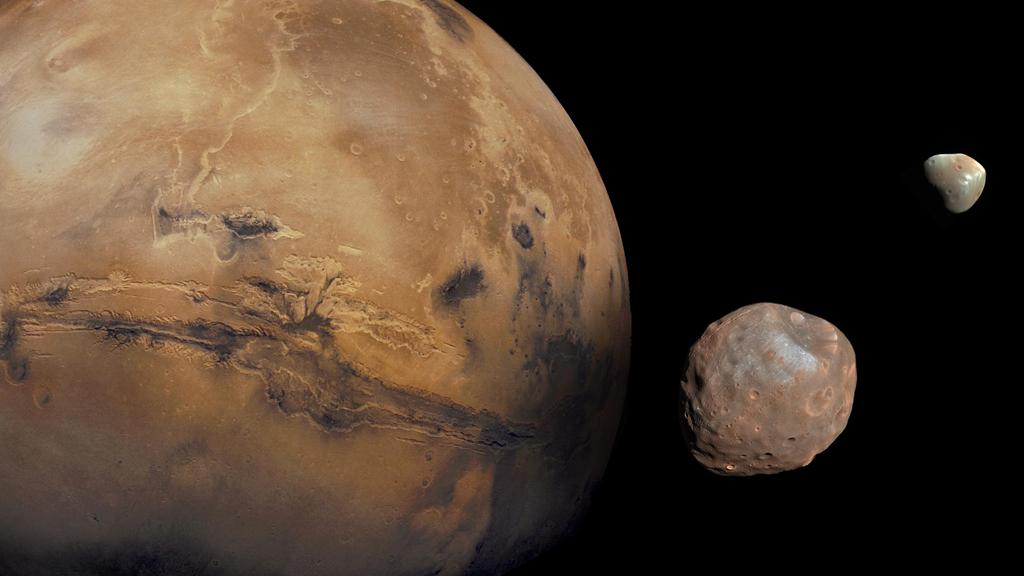 Previously unpublished photos of Mars' moon Phobos hint that the mysterious satellite may actually be a trapped comet -- or perhaps just a piece of one, along with its twin moon Deimos.
Pomegranate Power: Compound May Aid Memory in Alzheimer's
Neuroscience News - 22 May 2024 23:17 A new study finds that urolithin A, a substance found in pomegranates, can improve memory and may help treat Alzheimer's disease. This natural compound works by removing damaged mitochondria from the brain, similar to th...
Ancient Viruses Linked to Mental Illness
Neuroscience News - 22 May 2024 22:43 A new study reveals that ancient viral DNA sequences, once thought to be "junk DNA," are active in the human brain and contribute to the risk of psychiatric disorders like schizophrenia, bipolar disorder, and depression....
Mind-Blowing Head Transplant System with Robotic Surgeons and AI Precision
Neuroscience News - 22 May 2024 21:08 BrainBridge, a neuroscience and biomedical engineering start-up, has unveiled a revolutionary concept for a robotic head transplant system. This ambitious project aims to offer a new lease on life for patients suffering ...
Modern soldiers test ancient Greek armour to show it worked for war
New Scientist - 22 May 2024 21:00 An experiment inspired by Homer's description of combat in The Iliad tested the capabilities of the Dendra armour suit from Greece's Bronze Age
High BMI Shrinks White Matter in Brain
Neuroscience News - 22 May 2024 20:42 A new study finds that high cumulative BMI is linked to smaller brain volume, increased white matter lesions, and abnormal brain structure. These negative effects are especially pronounced in adults under 45 and over 60....
Dyson Spheres: Astronomers Report Potential Candidates for Alien Megastructures--Here's What to Make of It
Singularity Hub - 22 May 2024 20:22
There are three ways to look for evidence of alien technological civilizations. One is to look out for deliberate attempts by them to communicate their existence, for example, through radio broadcasts. Another is to look...
Ancient Mycenaean armor is so good, it protected users in an 11-hour battle simulation inspired by the Trojan War
Live Science - 22 May 2024 20:00 Researchers recruited volunteers from the Hellenic Armed Forces to test the strength of replicas of 3,500-year-old body armor.
Arielle Johnson digs into the science of flavour in her tasty new book
New Scientist - 22 May 2024 20:00 Fancy developing sommelier skills? Or making some coffee-infused rum? Try Arielle Johnson's delicious new book Flavorama
To stay alive, try being more female
New Scientist - 22 May 2024 20:00 From infections to brain injuries, the female body is more resilient than the male. It is time to reassess the "weaker" sex, says Cat Bohannon
Quantum to cosmos: Why scale is vital to our understanding of reality
New Scientist - 22 May 2024 20:00 From the vastness of the universe to the infinitesimal particles that comprise it, extremes of scale defy comprehension - and present a problem for physicists seeking a unified theory of everything
New psychology book reckons with separating solitude from loneliness
New Scientist - 22 May 2024 20:00 In a social world, being alone (by choice or not) is complex. Solitude: The science and power of being alone by Netta Weinstein, Heather Hansen and Thuy-vy T. Nguyen brings us up to date
How do you tell apart seemingly identical fanged frogs from Thailand?
New Scientist - 22 May 2024 20:00 Feedback is delighted to learn that there is a better approach to distinguishing different types of fanged frogs than just looking at them
Food, sex, drugs and more - are we addicted to addiction?
New Scientist - 22 May 2024 20:00 New proposals for addictions seem to keep cropping up, but the reality is we don't truly understand the mechanisms behind our cravings in the first place
Could we live in tree cities grown from giant sequoia in the future?
New Scientist - 22 May 2024 20:00 This week our new Future Chronicles column, which explores an imagined history of inventions of the future, visits carbon negative cities: forest homes grown from giant sequoia, genetically engineered for rapid growth. R...
Ancient viruses in the human genome linked to mental health conditions
New Scientist - 22 May 2024 19:31 People with higher genetic risk for depression, schizophrenia and bipolar disorder are more likely to have unusual activity levels of "fossil viruses" in their genomes
 Global
 Great Britain
 Indian
 South Africa